
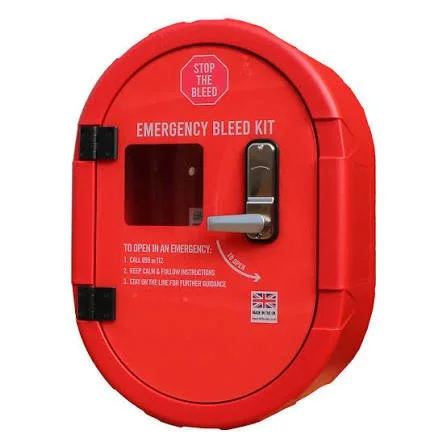
Extreme Bleeds & Community Bleed Kit Awareness
£25.00
Course duration: 3 hours
Price displayed is per person
Minimum of eight people on a course
Maximum number is dependent on location
Our Extreme Bleeds & Community Bleed Kit Awareness course provides essential knowledge and practical skills for individuals who may be first on scene when someone suffers a serious or life-threatening bleed in a workplace, public space, or community setting. Designed to promote a rapid, safe, and effective response, this course focuses on recognising life-threatening bleeding, taking immediate action, contacting the emergency services, and using a community bleed kit appropriately while waiting for professional medical assistance. Ideal for employees, community groups, schools, security staff, volunteers, support workers, public-facing staff, and anyone who may encounter a serious bleeding emergency, this training helps build confidence in responding calmly and effectively during the critical first few minutes of an incident.AF3
Participants will learn how to:
Understand what constitutes a life-threatening or extreme bleed.
Recognise the signs and symptoms of severe blood loss.
Understand the importance of acting quickly in a major bleeding emergency.
Understand the role of a first responder while awaiting emergency medical assistance.
Scene Safety & Initial Assessment:
Assessing the scene for danger before approaching a casualty.
Protecting yourself from blood and bodily fluids.
Carrying out an initial assessment of the casualty Identifying the location and severity of bleeding Knowing when and how to call 999.
Managing Extreme Bleeding:
Understanding the different types of serious bleeding.
Applying firm and effective direct pressure.
Using wound packing where appropriate.
Applying pressure dressings correctly.
Maintaining pressure until professional medical assistance arrives.
Recognising signs of shock and deterioration.
Community Bleed Kits:
Understanding the purpose of community bleed kits Identifying the equipment commonly found within a bleed kit.
Understanding when a bleed kit should be accessed and used Safe and appropriate use of haemostatic dressings where provided Safe and appropriate use of wound-packing materials.
Understanding the correct use of tourniquets where included and appropriate.
Maintaining pressure and monitoring the casualty after treatment.
Tourniquet Awareness:
Understanding when a tourniquet may be required for catastrophic limb bleeding.
Understanding the principles of correct tourniquet placement and application.
Recognising the importance of recording the time a tourniquet is applied.
Understanding the need for urgent professional medical treatment following tourniquet application.
Understanding that a tourniquet should not be routinely loosened or removed by an untrained responder.
Shock & Casualty Care:
Recognising the signs and symptoms of hypovolaemic shock Keeping the casualty calm and reassured.
Preventing unnecessary movement where possible Keeping the casualty warm while awaiting emergency services.
Continuously monitoring the casualty and responding to changes in their condition Calling.
Emergency Services:
Knowing when to call 999 and request an ambulance.
Providing the emergency operator with clear and accurate information.
Giving the location and nature of the incident. Following instructions provided by the emergency services.
Providing an effective handover to ambulance or medical professionals.
Infection Prevention & Personal Safety:
Using gloves and other PPE contained within the bleed kit.
Reducing the risk of exposure to blood and bodily fluids Safe handling and disposal of contaminated materials.
Understanding basic infection prevention procedures.